
Free consultation:
A Practical & Safe Guide for UK Homes
Placing a television above a log burner can look striking in a living room, creating a cosy focal point where performance meets entertainment. But before you commit to this layout, it’s important to understand the risks, heat implications and best practices involved. Heat rising from a wood burner can affect delicate electronics, and poor installation can shorten a TV’s lifespan or even damage its components.
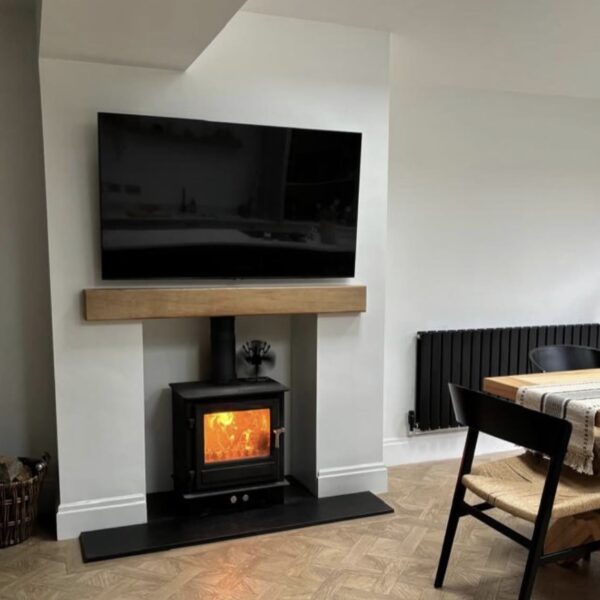
This guide breaks down everything you need to know — from safety and positioning to protective measures and alternatives — so you can make a confident and informed choice.
🔥 Why This Matters: Heat, Electronics & Comfort
📌 The Heat Issue
Log burners generate substantial radiant heat. Heat naturally rises and can build up on chimney breasts or walls above the appliance. This rising warmth may:
-
Affect your TV’s internal circuitry over time.
-
Reduce picture quality and lifespan.
-
Cause plastic bezels or casings to warp with prolonged exposure.
TV manufacturers typically list maximum operating temperatures in their documentation. Many consumer screens are designed for temperatures up to around 35–40°C, and sustained heat above this range can lead to performance issues — even if the TV keeps working.
📌 Viewing Height & Comfort
Mounting a TV too high — which often happens when it’s placed above a fireplace or burner — can lead to neck strainduring extended viewing. The ideal line of sight is usually at eye level when seated, so this is worth factoring into your room design.
📏 Safe Placement: Distance & Wall Suitability
🧱 Choose a Suitable Wall
Before installation, check that the chimney breast or wall surface:
-
Is structurally strong enough to support both the weight of your TV and its mount.
-
Has sufficient depth and material (stone or brick is often best) to disperse heat and withstand warmth over time.
Walls made of plasterboard or thinner materials may not offer as much protection or stability.
📐 Recommended Clearances
There is no single universal rule for how much space must be between your burner and your TV, as appliances differ in heat output. That said:
-
Aim for a significant vertical gap between the top of the log burner and the bottom of the TV.
-
Industry guidance often suggests at least 600mm (60cm) from a wood burner to the TV when possible.
You can test a potential mounting spot with a simple thermometer — or even your hand — to check whether it feels uncomfortably warm when the burner is in use.
🛠 Installation Best Practices
🔩 1. Use the Right Mount
Select a high-quality wall mount that:
-
Supports the full weight of your TV.
-
Offers tilt or extension adjustment — ideal for lowering the TV out of the path of rising heat and improving viewing angles.
-
Is made from heat-tolerant materials designed for positioning near warmth.
This flexibility can greatly enhance comfort and protect your equipment.
🪵 2. Add a Mantel or Heat Deflector
Fitting a well-designed mantel shelf or heat shield above your log burner helps redirect heat away from the TV. A mantel:
-
Acts as a physical barrier that interrupts rising heat.
-
Improves airflow so warmer air disperses into the room rather than climbing vertically.
Make sure any mantlepiece is installed to manufacturer standards and made from heat-resistant materials.
💨 3. Consider Fans or Deflector Tech
Fans or heat deflector systems can help circulate warm air across a room rather than concentrating it directly above the stove. These are especially helpful if you must place a TV above the fire and want to balance warmth with electronics safety.
🧼 Maintenance & Monitoring
Keeping both your log burner and TV in good order increases safety and longevity.
🧹 Regular Cleaning
-
Remove soot, ash and dust around the burner area — these particles can drift upwards and settle inside your TV’s vents.
-
Dust the TV screen and frame with a soft, dry cloth — never use harsh chemicals.
-
Schedule annual chimney and stove inspections, ensuring optimum performance and reducing excessive soot build-up.
🔍 Watch for Heat Stress
Check periodically for signs of heat damage to your TV, such as:
-
Screen discolouration or odd colour shifts.
-
Unusual flickering.
-
Hot spots on the casing.
-
Weakened plastic or warped components.
If any of these appear, reconsider the positioning or increase protective measures.
📌 Practical Alternatives
If you’re unsure about combining a TV and log burner in the same vertical space, here are some stylish and safer alternatives:
🖼 Place the TV on a Different Wall
Choosing a separate wall for your TV not only avoids heat issues but often gives better viewing comfort and flexibility.
📺 Corner Mounting
Mounting the TV on a side wall or in a corner keeps it clear of heat, while still making it a visual bedfellow with your fireplace aesthetic.
📦 Recessed Niche
Building a recessed niche or cavity for the TV can buffer direct heat. This approach gives a sleek, custom look while managing thermal exposure.
❓ Frequently Asked Questions
🧠 Can UK TVs handle heat from a log burner?
Most modern TVs are rated for moderate room temperatures, but prolonged exposure to heat above their recommended range is not advisable. Always check the manufacturer’s guidelines for heat limits.
📏 What’s the ideal distance between a log burner and a TV?
While specific warm distances depend on the burner and room, aiming for at least 600mm (60cm) between the top of the burner and the bottom of the TV is a realistic starting point, and additional protective measures will further enhance safety.
🔥 Will heat really damage my TV even if it’s not super close?
Yes — radiant heat and soot particles over time can degrade internal components and affect picture quality or lifespan. Heat shielding and clearances minimise this risk.
🛠 Does having a mantel really help?
Yes. A properly sized and positioned mantel acts as a heat deflector and barrier, helping redirect warmth into the room before it reaches the TV.
✅ Final Thoughts
Mounting a TV above a log burner can work — but only with careful planning, protection and sensible clearances. While the setup can create a striking and cosy focal point, it must be balanced against the risk of heat damage and viewing comfort.
If you’re in doubt, alternative placements or additional protective measures such as heat shields, adjustable mounts and good airflow systems can help you enjoy both your log burner and TV without compromise.
Need personalised advice for your home setup? Contact Firecraft Fireplaces — our experts are here to help you find the safest, most stylish layout for your living space.
